Why sheds suit solar
Solar on a
Taranaki dairy shed
Most of a shed’s load sits in the two milkings and the hours around them, which is daylight for a good part of the year. A house does the opposite, using most of its power after dark when the panels have stopped.
That matters because power you use on site is worth more than power you export. The closer your generation sits to your load, the better the system works for you.
Where the power goes
What actually uses the electricity in a shed
Before talking about panels it is worth knowing where the power goes. On most Taranaki dairy farms the significant loads are:
Which of these dominates varies a lot from farm to farm. That is why we look at your actual usage before quoting anything.
Sizing it to the farm, not to the roof
There is always a temptation to fill the shed roof because the space is there. We would rather design to what you actually use.
A bigger system is not automatically a better one. It is only better if you are using what it makes.
Installing around milking
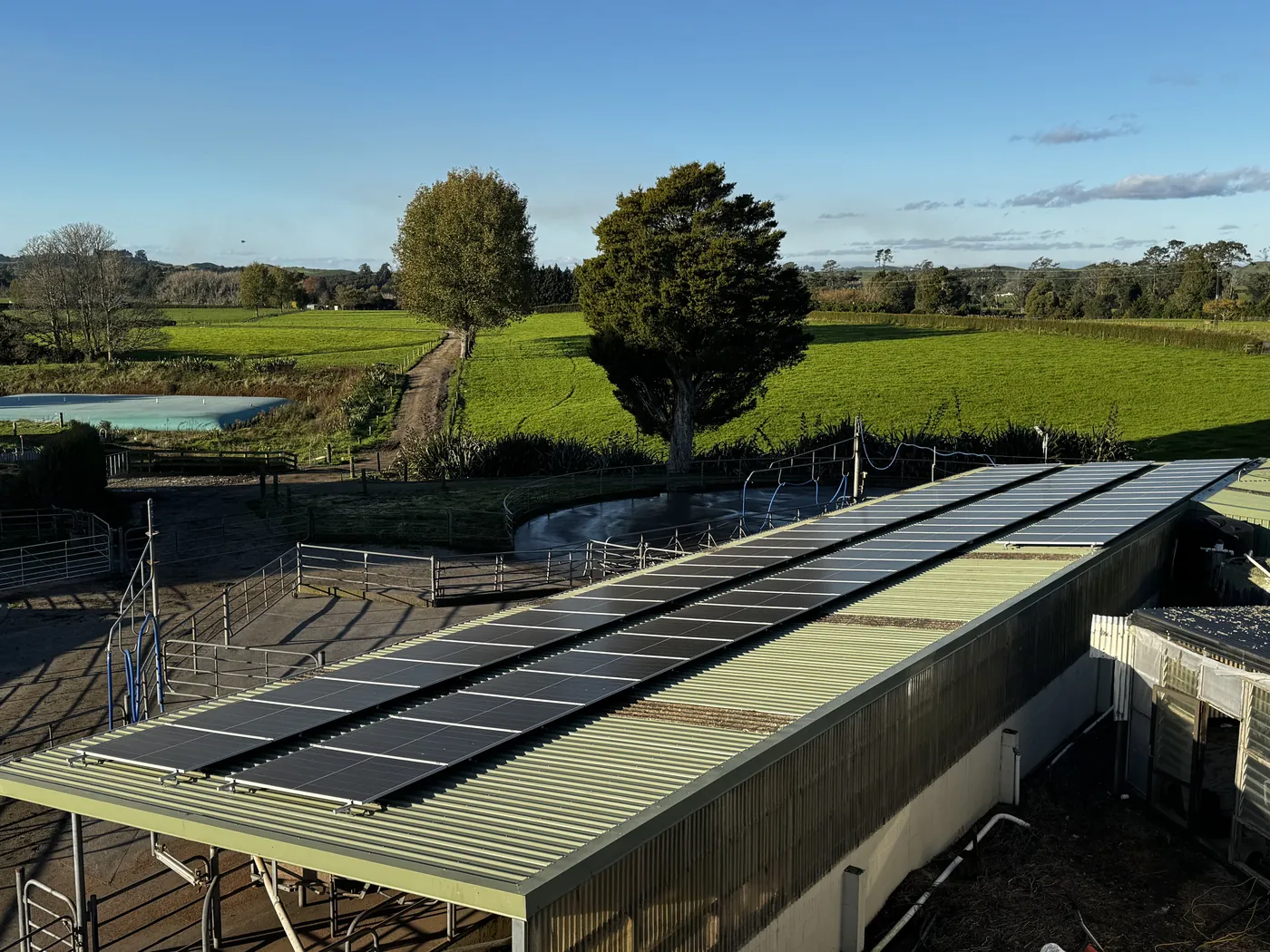
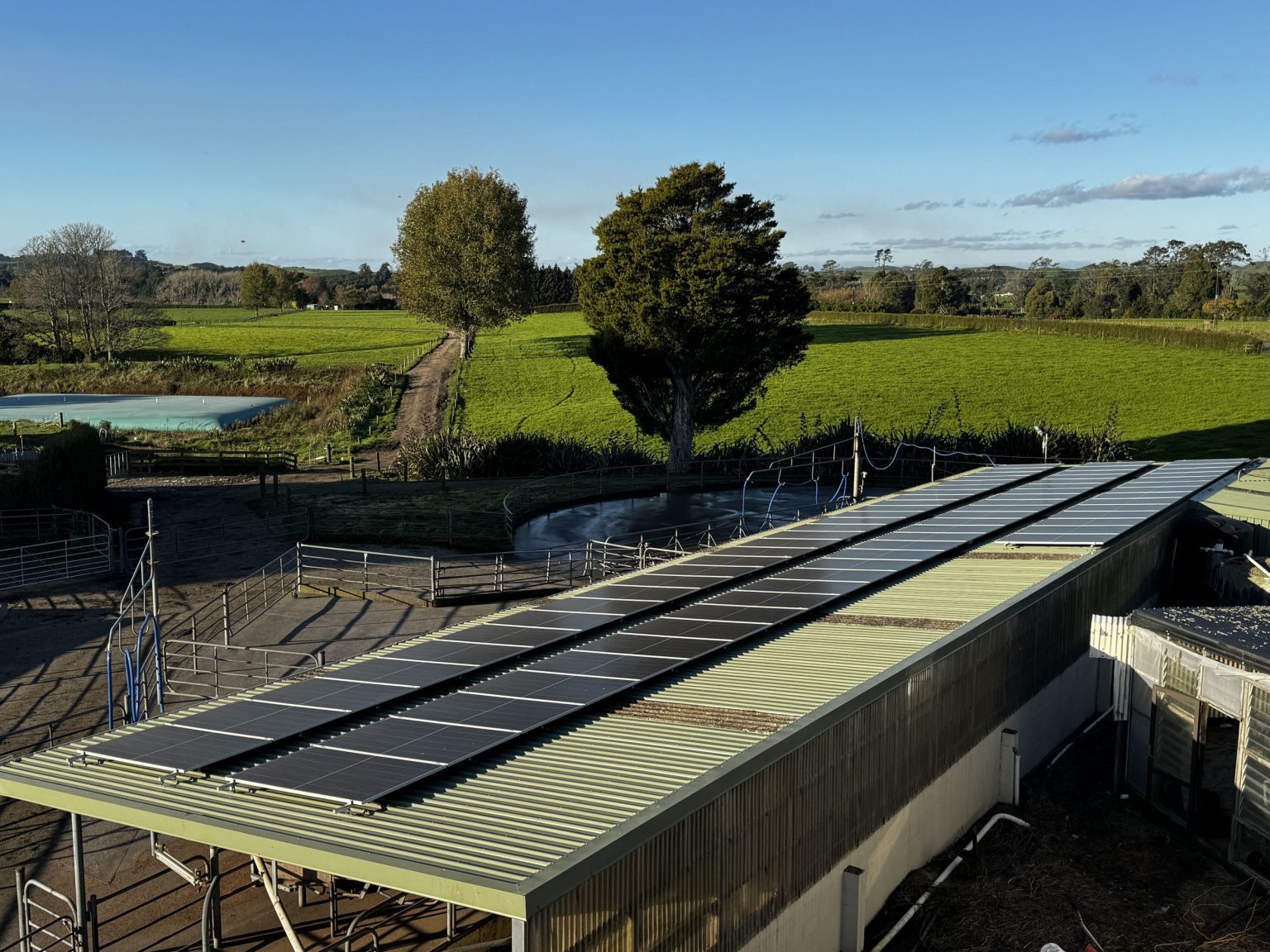
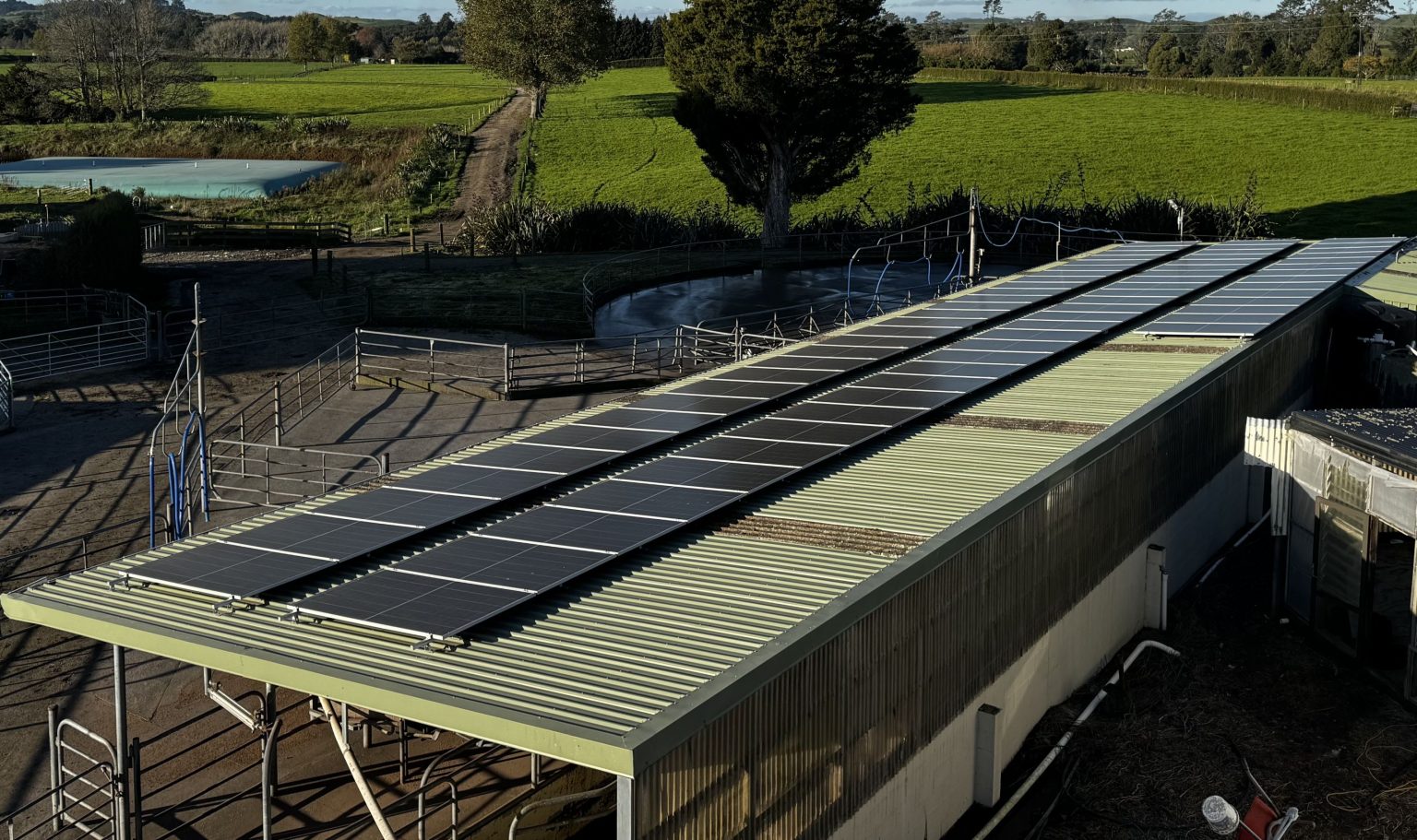
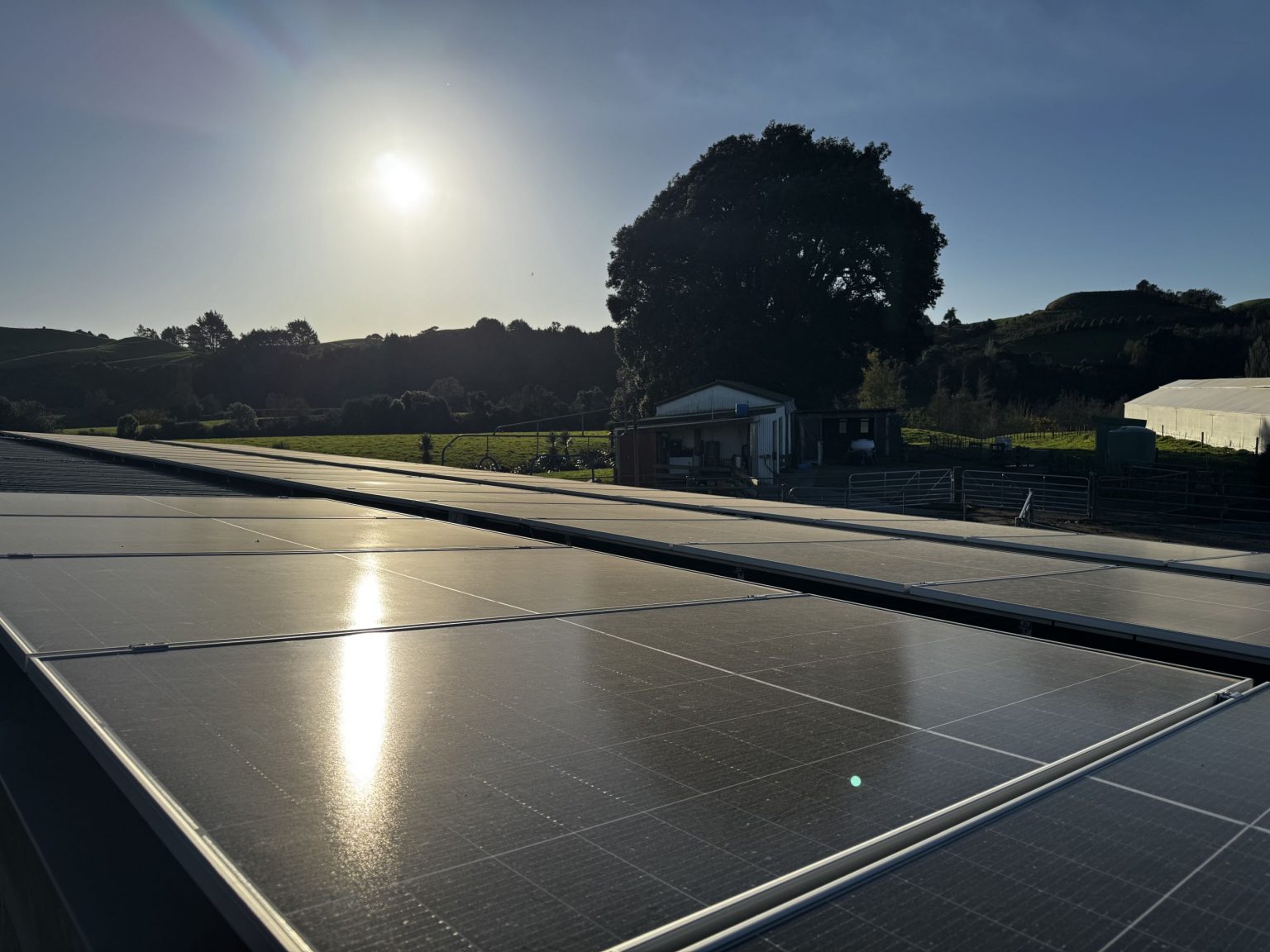
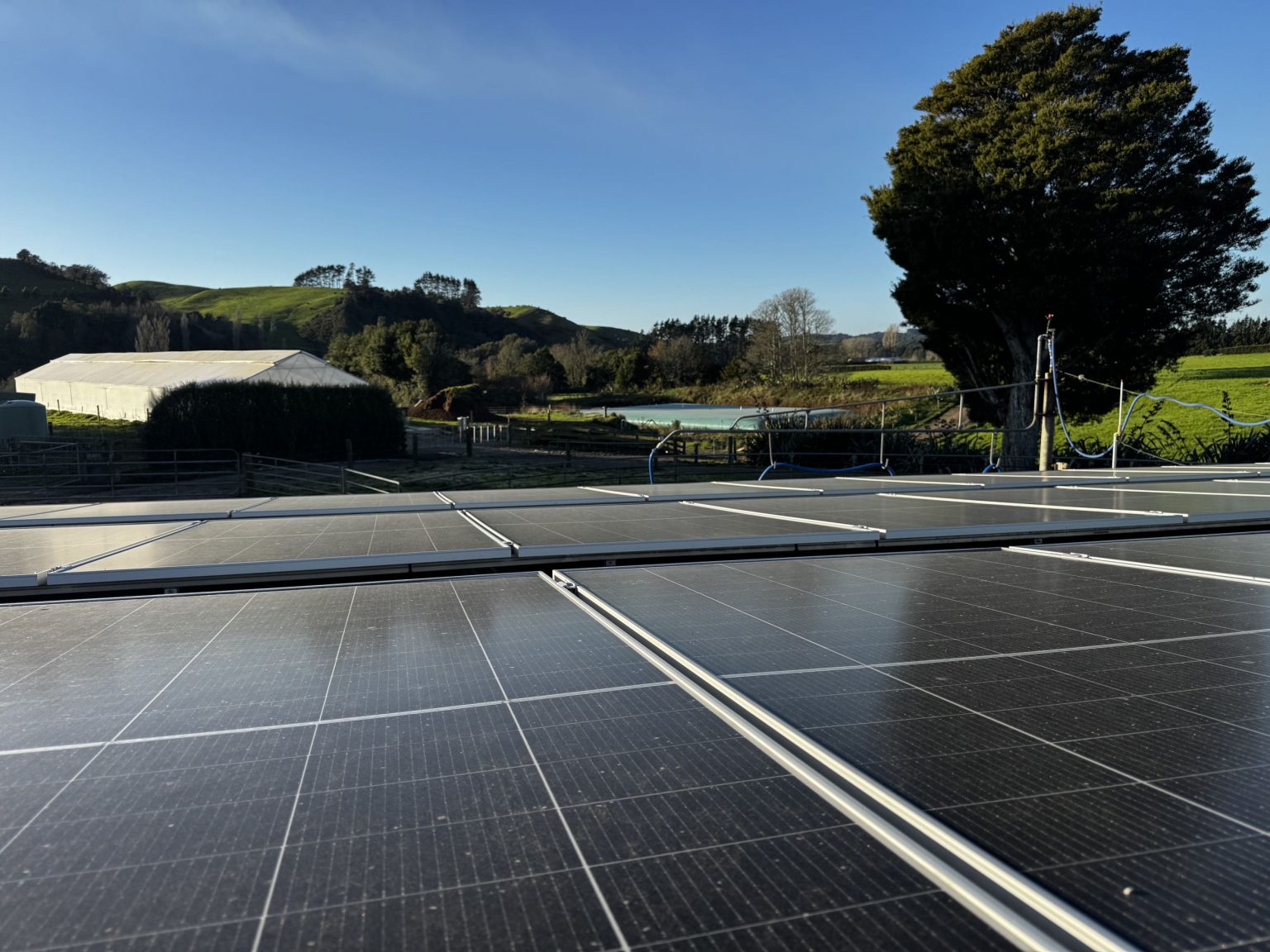
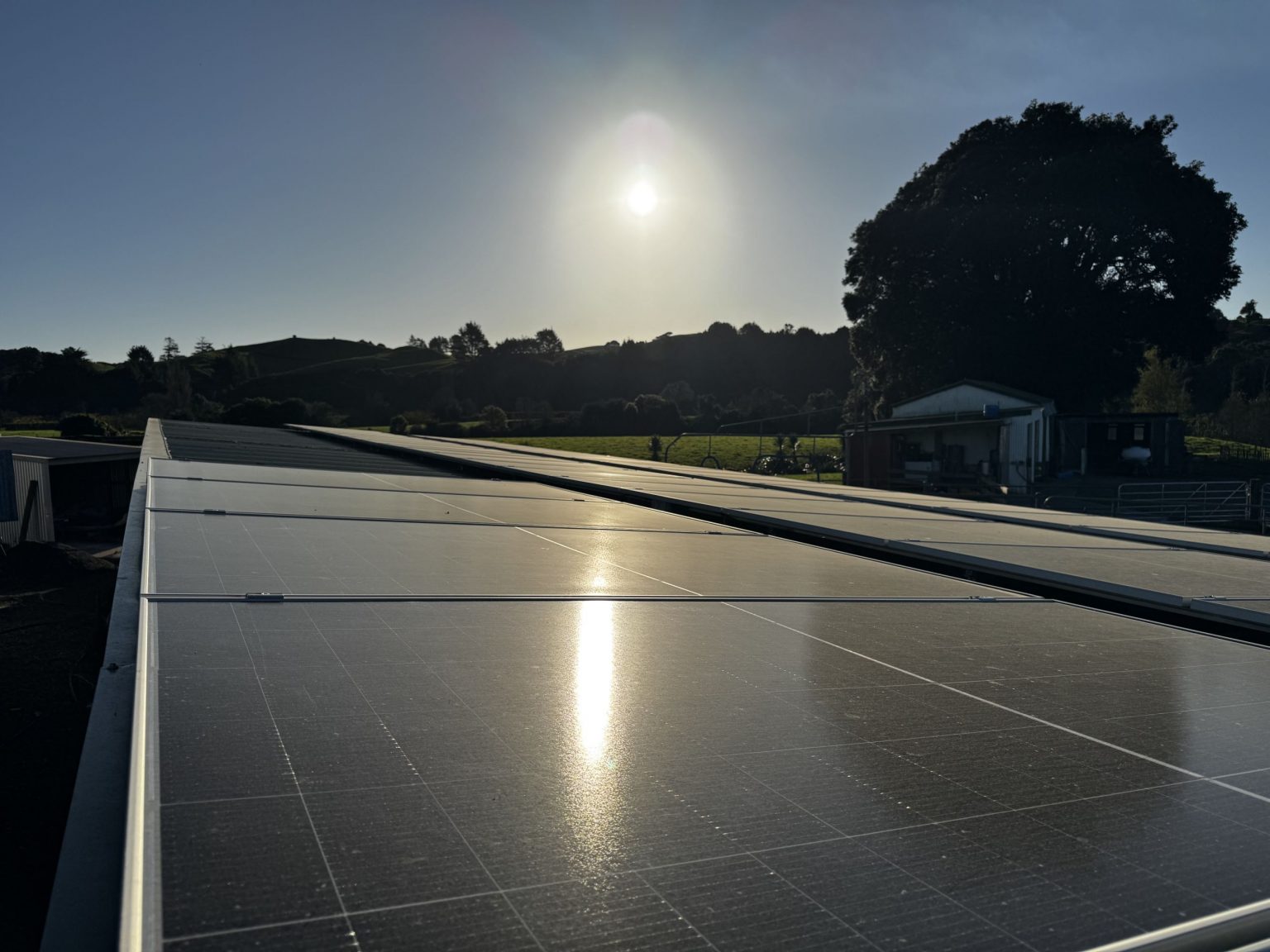
A dairy shed cannot stop for a solar install, and it does not need to. On the Powell installation at Inglewood the panels went up over a matter of days, worked in between milkings, with very little disruption to the cows.
From one of our dairy clients
“It’s been great. Hayden has spent a great deal of time looking at how we use power, thinking about things we can change so that we are not buying a bigger system than we need. We’ve been able to save more than the initial estimates just by rethinking what we were doing and when.”
Ian Powell, dairy farmer, Inglewood
Future proofing electricity with solar panels
Inglewood dairy farmers Ian Powell and LeAnne Blakelock are thrilled with the latest installation of solar on their dairy shed supplied by Streamline Solar. The total project was put up in a matter of days and between milkings to cause very little disruption to the cows. As lower order sharemilkers for the family equity partnership, the couple were looking to be progressive in tackling every rising on farm costs as well as move to more sustainable low carbon options of power supply.
Looking into various options they were surprised to find the longevity of the newer generation panels is 25 years and cost payback with power savings is estimated at 5 years. This will essentially give the farm 20 years of subsidised power over the life of the asset.
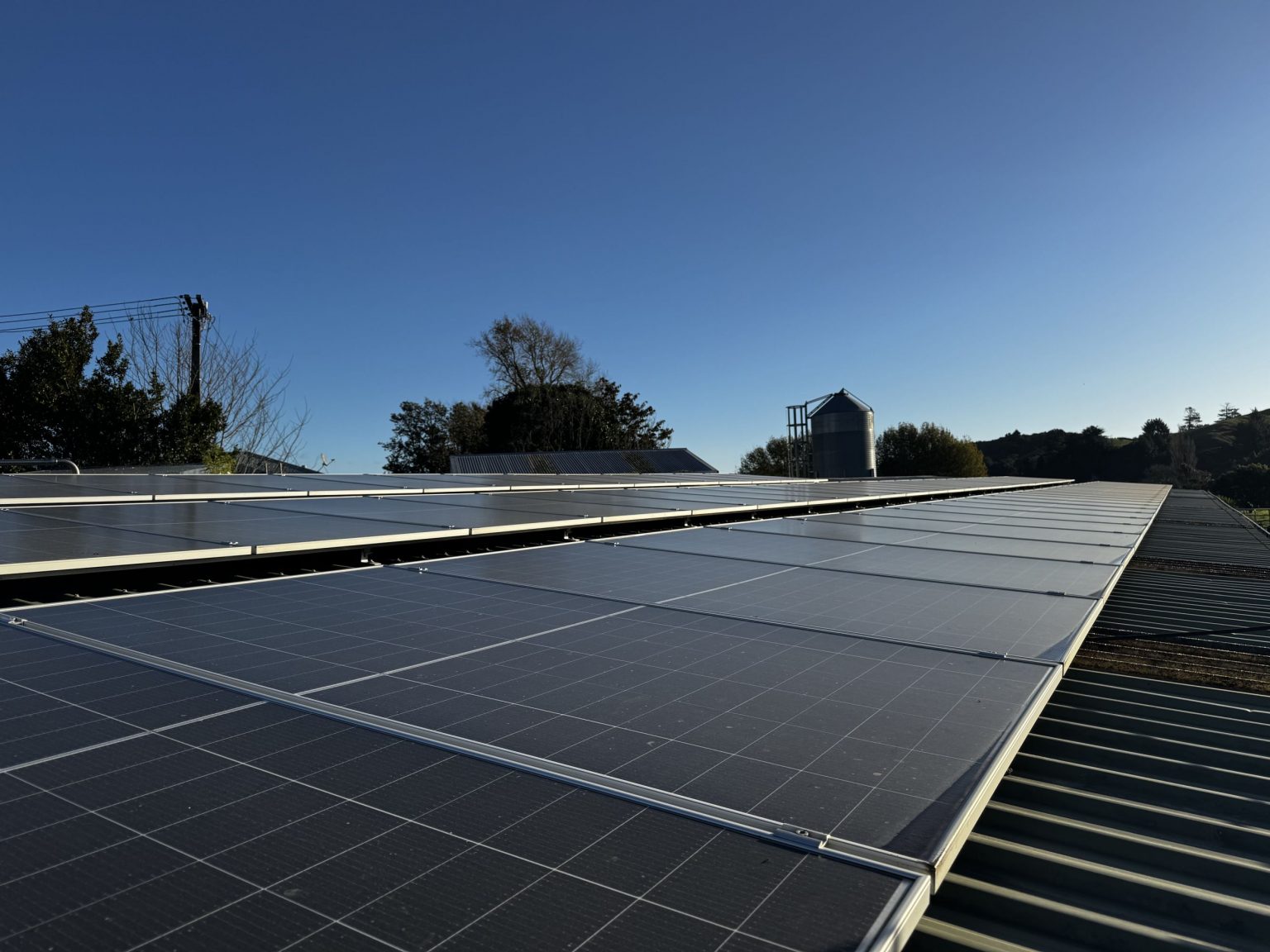
With a north facing dairy shed, it was an easy and low profile option to have the panels mounted on the roof and to date maintenance has proved to be very minimal.
Streamline Solar owner, Hayden Stokell was happy to work with existing infrastructure and get to know the patterns of power use to design a system that fitted the size of demand and with further work on streamlining when power is used, the farm has been able to make even more savings and make the most of solar.
Solar is becoming more accessible with many of the major banks offering lower interest rate loans for investment into sustainability projects. This particular project was made possible by Finance HQ, an asset finance specialist. Spreading the cost over 5 years means the monthly payment is similar to what the power saved would be, leaving no major cash deficit to come up with. A fully integrated system connected to a phone app means transparency and daily reporting of power generated and used can be easily monitored.
Information supplied by Taranaki Catchment Community.
Free guides
On-farm energy efficiency
Our affiliations